United States
United States
Couldn't load pickup availability
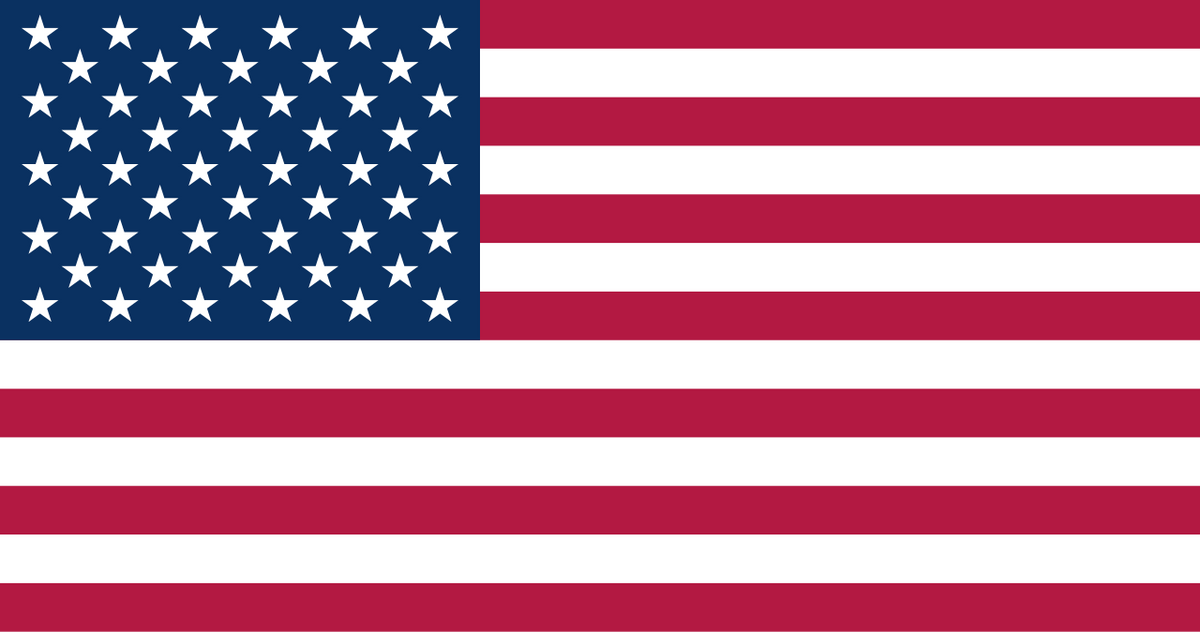
3×5' nylon national flag of the United States of America.
The Stars and Stripes was born in Philadelphia. On 14 June 1777 the Continental Congress resolved "that the flag of the thirteen United States be thirteen stripes, alternate red and white; that the union be thirteen stars, white in a blue field, representing a new constellation." Flag Day 2027 marks the 250th anniversary of that resolution.
Design
Thirteen horizontal stripes, seven red and six white, with a blue canton bearing fifty white five-pointed stars in nine offset rows of six and five.
History & Symbolism
The stripes stand for the thirteen original colonies and the stars for the states. The flag has changed 26 times as states joined the Union, and the current 50-star design became official on 4 July 1960, after Hawaii's admission. It was first sketched as a high school project by Robert G. Heft of Ohio. The colors were never given an official meaning, though red is often read as valor, white as purity, and blue as vigilance and justice.
Flag Specifications
- Adopted: 14 June 1777; 50-star version 4 July 1960
- Official proportions: 10:19 for federal government use; 3:5 is standard for most flags
- Colors: Old Glory Red, white, Old Glory Blue
Vexillographer's Note
The story that Philadelphia upholsterer Betsy Ross sewed the first flag is one of the city's most cherished traditions, though no record from 1777 confirms it. The United States Flag Code sets out how to display, fold and retire the flag.
Humphrys Flag Company · Old City Philadelphia · Est. 1864
Share